Moves
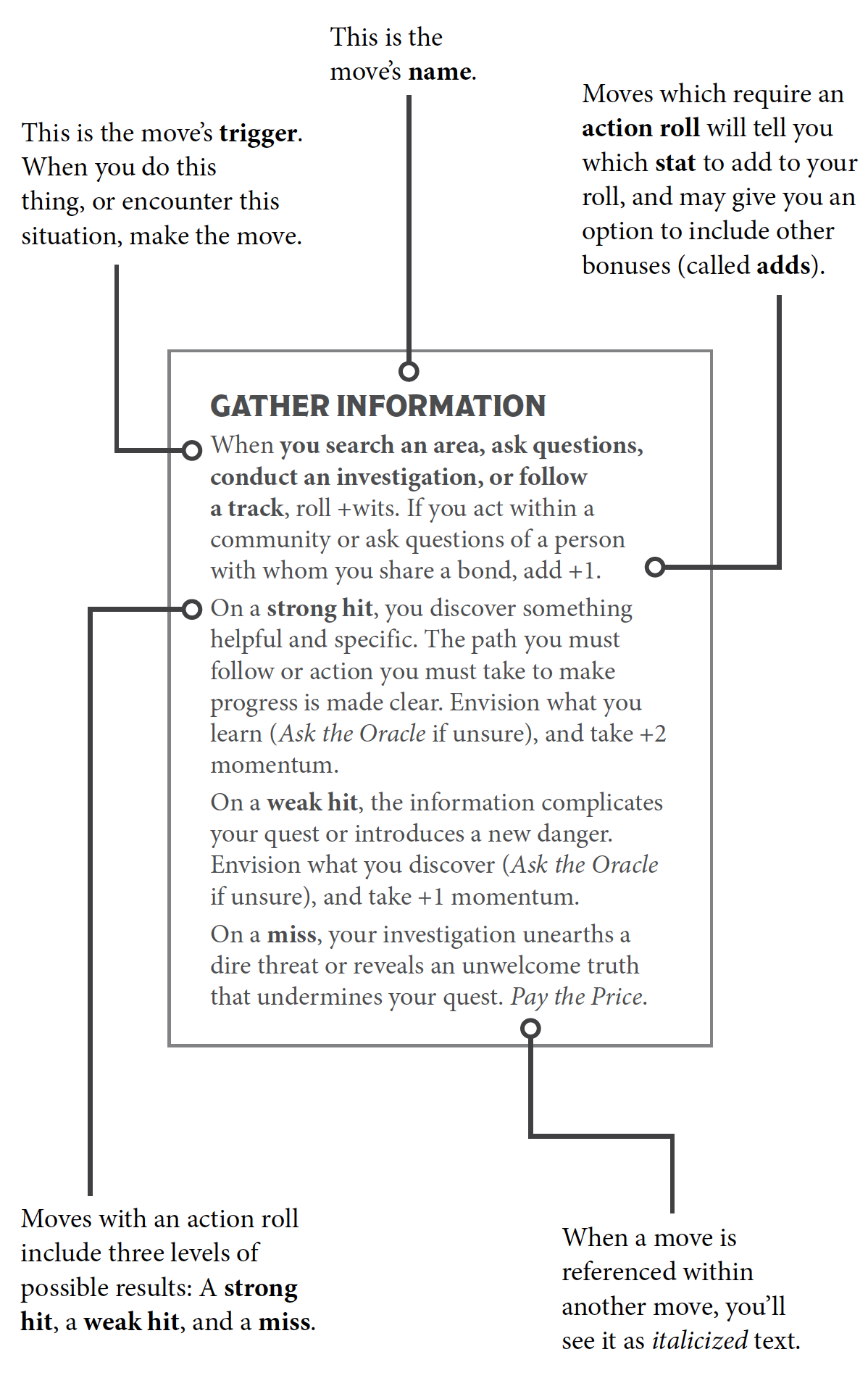
Moves are self-contained systems to resolve a specific action, scene or question. There is a move for most common situations you encounter in Ironsworn. They have specific triggers, phrased as “When you [blank].” When your character does that thing, or you encounter that situation, refer to the move to see what happens.
Moves are organized by activities.
- Adventure moves (page 60) cover a variety of dangers, conducting investigations, traveling, making camp, and healing.
- Relationship moves (page 69) involve persuading others to do something, building bonds with people and communities, resting and recuperating within a community, aiding your allies, and initiating duels.
- Combat moves (page 78) are used when fighting (but not exclusively; other moves may come into play as well).
- Suffer moves (page 90) occur when you endure hardship, such as suffering physical harm or facing a dispiriting challenge.
- Quest moves (page 98) encompass iron vows, making progress in a sworn quest, and improving your character.
- Fate moves (page 104) help you decide what happens in solo and co-op play, or support the GM’s decisions and brainstorming in guided play.
When a move’s name is referenced within these rules or by another move, you’ll see it as italicized text.
Most moves are based on risky actions you are taking. You are attacking with your sword, making a dangerous climb, or healing an ally. These moves use dice to determine the outcome. This is called an action roll (page 8).
Some moves measure your headway against an extended challenge, such as a journey or fight, using a progress track (page 14). When you are ready to resolve the challenge, you make a progress roll (page 18).
Other moves utilize a different kind of dice roll, called an oracle roll (page 22). These moves help determine the outcome of uncertain events out of your character’s control. If you’re playing solo or co-op, you can use the Ask the Oracle move (page 107) to answer questions about the world, resolve how other characters respond, or determine what happens next.
Some moves don’t require a roll. They might support or reference a separate move, or simply help you resolve a mechanical or narrative situation. Don’t roll dice unless a move tells you to. To learn more about moves, see page 49.